
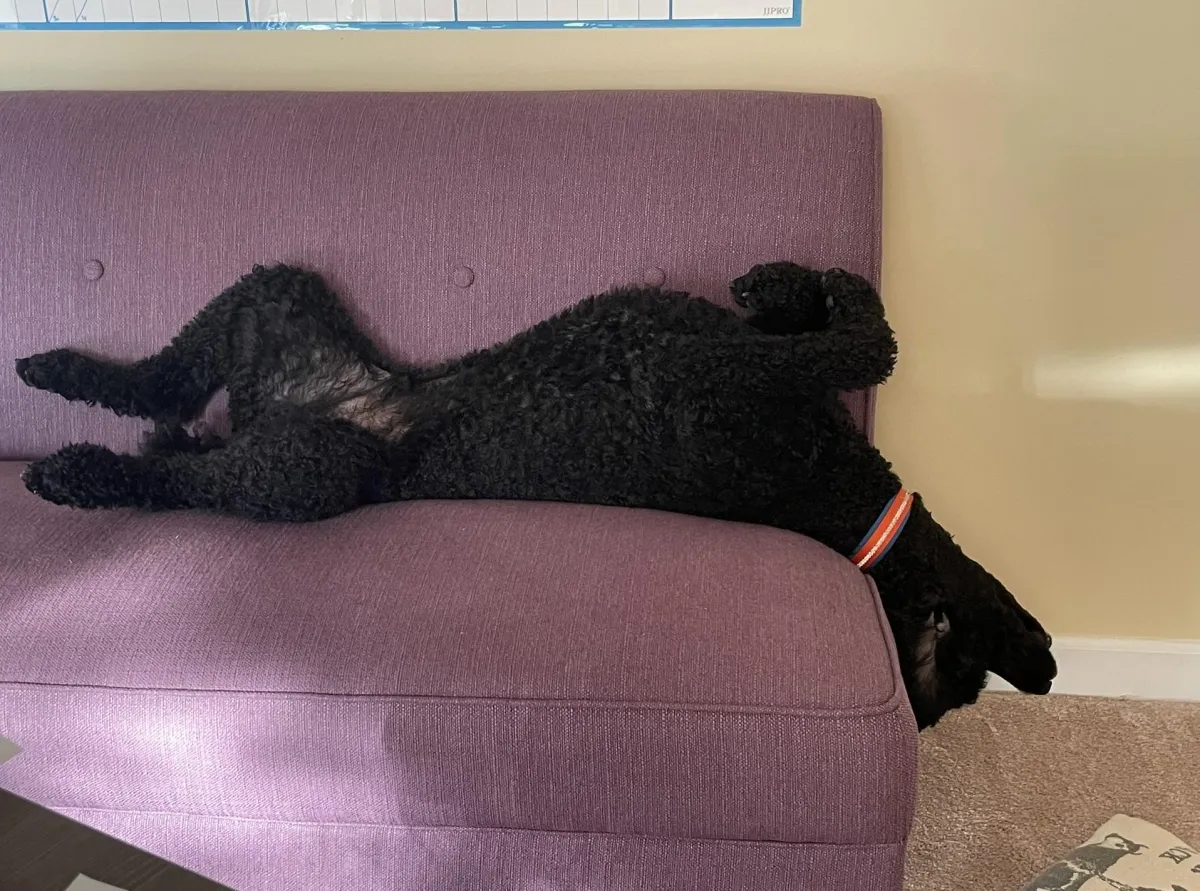
Don’t Blame the Chair
Why stress, sleep, and environment can change how your body responds to food
The room can stay the same while your experience of it changes
You can sit in the same room two nights in a row and have two entirely different experiences.
One night, the room is quiet. Your dog is curled up beside you. You have a movie on that you have seen enough times that nothing in it requires much from you. The lights are low. No one needs an answer and you can simply relax.
The next night, it's technically the same room.
But the television is too loud. Someone is texting. The dog is pacing. The air feels stuffy. You have a headache, you slept badly, and there are three things you're trying not to forget.
Nothing in the room is especially terrible.
There is simply less room left inside you for one more thing.
Bodies can work that way, too.
Your body is responding to more than the last thing you ate
When a food reaction happens, it makes sense to look at the food.
Sometimes the food is the problem.
But the body does not meet food in isolation. It meets food while also dealing with sleep, stress, illness, hormones, digestion, temperature, pollen, chemicals, medications, movement, relationships, and whatever else has wandered into the picture.
That doesn't mean everything matters equally.
It means the last thing you ate may not be the only useful clue.
A meal that feels fine after several solid nights of sleep may feel very different after a week of waking at 3 a.m.
A food you tolerate at home may land differently during a stressful trip.
A restaurant meal may seem like the obvious culprit when the bigger picture also includes heat, poor sleep, alcohol, pollen, a long drive, and a nervous system that has been “on” since Tuesday.
Bodies are deeply inconvenient sometimes.
But they often become more understandable when you widen the frame. What else is in the picture?
Stress changes what the body is doing
Stress is not just a feeling.
It changes physiology.
Your body may shift blood flow, digestion, muscle tension, glucose regulation, immune signaling, hormone production, and attention toward whatever it believes requires the most immediate response.
That is useful when you need to handle a real threat.
It is less useful when the stress is an overflowing inbox, a hard conversation, poor sleep, financial pressure, caregiving, pain, or simply too many decisions for too many days.
Digestion may slow down or speed up.
The gut may become more sensitive.
Muscles may stay braced.
Symptoms that were once background noise may become much harder to ignore.
This doesn't mean stress is “causing everything.”
It means stress may leave your body with less room for everything else.
That's useful information.
Sleep creates more working room
Sleep is when much of the body’s repair, regulation, sorting, and cleanup work takes place.
One poor night may not change much.
Several poor nights can.
You may notice more pain, stronger cravings, shakier energy, more emotional reactivity, slower thinking, less patience, or a lower tolerance for foods that usually seem fine.
Again, that doesn't make the reaction imaginary.
Poor sleep can change immune activity, glucose control, appetite signaling, pain sensitivity, and the way the brain processes physical sensations.
The food may be the same.
The body meeting the food is not.
This is one reason a reaction journal that records only food can leave you with more questions than answers.
The missing clue may be that you slept five hours, woke twice, and had already been running on fumes for three days.
Environment belongs in the picture, too
Environment can sound vague until it becomes specific.
It may mean:
high pollen
heat
wildfire smoke
mold
cleaning products
perfume
a stuffy hotel room
a change in altitude
a storm blowing in
a long day under fluorescent lights
a noisy restaurant where your whole system is already working harder
Some of us notice these things clearly.
Others do not see it until they look back and notice that symptoms tend to flare in the same season, the same building, after storms, or around particular exposures.
Environment doesn't explain every reaction.
But when the same food feels different in different settings, the setting may deserve a place in the story.
The goal is not to track every possible variable
This is where food sensitivities and reactions can accidentally become a new full-time job.
You don't need to record the weather, barometric pressure, pollen count, moon phase, every ingredient, every emotion, and whether someone wore perfume near you at 2:17 p.m.
That way madness lies. Or at least a very large spreadsheet.
The goal is to notice the bigger pattern.
You might ask:
Was I already tired?
Had stress been higher than usual?
Was I in a different environment?
Were several things happening at once?
Is this part of a repeating pattern, or was it one difficult day?
One symptom can be useful.
A cluster of symptoms, placed beside the timeline and the surrounding circumstances, usually tells us more.
A reaction does not always require a new rule
When something goes wrong, the quickest response is often to remove the food.
Sometimes that's reasonable, especially if a reaction is severe, consistent, or clearly connected.
But one reaction does not always mean the food has become permanently unsafe.
It may mean the timing was poor.
The amount was too much for that day.
Several demands stacked together.
Your body had less working room than usual.
You may still decide not to eat the food again right away. You may simplify meals for a day or two. You may choose rest, hydration, familiar foods, or less stimulation.
You may also decide to watch the pattern before creating another permanent rule.
Both can be thoughtful choices.
Look at the room before blaming the chair
If a chair feels uncomfortable in a crowded, hot, noisy room after a long day, the chair may not be the whole problem.
Food reactions can be similar.
The food matters.
So does the body eating it.
So does the room around the body.
Stress, sleep, and environment do not make symptoms less real. They help explain why the same input may create a different response at a different time.
That gives you more places to look.
And sometimes, a better next step than cutting out one more food.
60-Second Self-Care: Take a Wider Snapshot
A food journal does not need to record every bite, symptom, and passing thought.
Try capturing a few details that may help you see the fuller picture later:
what you ate
when you ate
how you slept
stress that day
where you were
heat, pollen, travel, illness, or unusual exposures
medications or supplements
symptoms and when they appeared
You may not notice the pattern in the moment.
A photograph often catches details we missed while we were standing in the room. A brief journal entry can do the same.


